
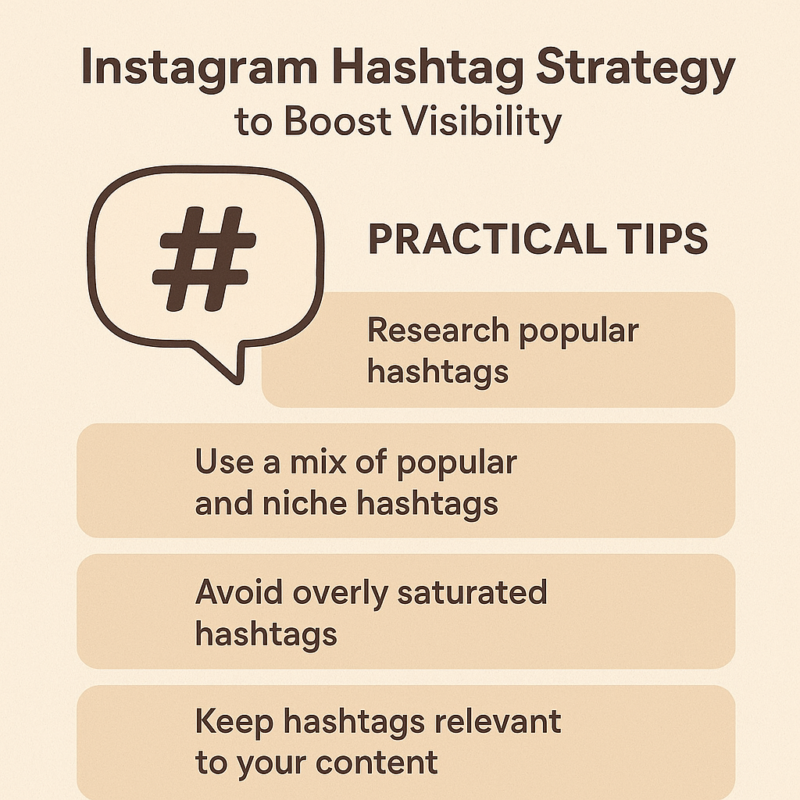
Instagram Hashtag Strategy to Boost Visibility with Practical Tips
Sep
Instagram Hashtag Strategy: Practical Tips to Increase Reach
Hashtags remain one of the simplest, most effective ways to improve your Instagram visibility. When used strategically, they can help your content reach people beyond your existing followers, attract relevant audiences, and support long-term account growth. However, the way you use hashtags matters far more than how many you include.
This guide explains how to use Instagram hashtags effectively, with practical tips focused on reach, relevance, and SEO performance.
Why Instagram Hashtags Still Matter
Instagram hashtags help categorize content and connect posts with users interested in specific topics. When chosen well, they can improve discoverability in search, Explore, and hashtag result pages. For brands, creators, and businesses, this means more opportunities to appear in front of the right audience.
The key is not to use hashtags randomly, but to build a clear, targeted hashtag strategy that matches your content and audience intent.
1. Use Hashtags That Match Your Content Exactly
One of the most common mistakes is using generic hashtags that have little connection to the post.
For example, if you are sharing a skincare routine, hashtags like #skincare, #beauty, and #skincareroutine are relevant. Broad tags such as #love or #instagood may bring impressions, but they rarely attract high-quality engagement.
A strong hashtag should reflect:
- The topic of the post
- The niche or industry
- The audience you want to reach
- The product, service, or content format
Relevance is more important than popularity.
2. Combine Broad, Niche, and Branded Hashtags
A balanced hashtag set typically includes three types:
Broad hashtags
These have high search volume and large audiences, such as:
#digitalmarketing#fitness#contentcreation
Niche hashtags
These target a more specific audience:
#instagramgrowthtips#mealprepskincare#smallbusinessbranding
Branded hashtags
These are unique to your business, campaign, or content series:
#YourBrandName#YourCampaignName
Using a mix of these helps your content reach both wider and more targeted audiences. Broad hashtags create exposure, while niche hashtags improve relevance. Branded hashtags support consistency and recognition.
3. Focus on Quality, Not Quantity
Instagram allows many hashtags per post, but using the maximum number is not always the best approach. A smaller, well-researched set often performs better than a long list of unrelated tags.
A practical range is usually between 5 and 15 highly relevant hashtags, depending on the content and account type. What matters most is whether each hashtag has a clear purpose.
Avoid:
- Repeating the same hashtags on every post
- Adding irrelevant trending tags
- Stuffing captions with too many hashtags
- Using banned or spammy hashtags
Clean, focused hashtag usage looks more professional and often performs better.
4. Place Hashtags in the Caption or First Comment Strategically
Instagram allows hashtags in the caption or the first comment. Both can work, but the most important factor is consistency and readability.
Placing hashtags at the end of the caption keeps the post clean and easier to read. Using the first comment can make the caption look more polished, especially for brand-focused content.
From an SEO standpoint, the placement is less important than relevance and timing. Choose the format that best supports the user experience.
5. Use Hashtags Based on Search Intent
Think of hashtags the same way you would think of keywords in SEO. People use them to find content with a specific purpose.
A user searching #homeworkout is likely looking for fitness routines they can do at home. Someone following #socialmediastrategy may want marketing insights, not general entertainment.
This means your hashtags should align with what the audience is trying to discover. The closer the match, the better your chances of attracting meaningful engagement.
6. Research Hashtags Before Using Them
Not all hashtags are equally effective. Some are oversaturated, while others may be linked to low-quality content or spam.
Before using a hashtag, check:
- How many posts use it
- Whether the content is relevant
- Whether the hashtag is active
- Whether top posts align with your brand or topic
A hashtag with millions of posts may be too competitive for smaller accounts. In many cases, medium-sized niche hashtags are more useful because they offer a better chance of visibility.
7. Refresh Your Hashtag Sets Regularly
Using the same hashtag list on every post can reduce effectiveness over time. Instagram may interpret repetitive behavior as low-effort or spam-like activity.
Instead, build several hashtag groups based on themes such as:
- Product posts
- Educational content
- Behind-the-scenes posts
- Seasonal campaigns
- Industry insights
Rotating hashtag sets keeps your strategy flexible and allows you to test what performs best.
8. Measure Performance and Adjust
A hashtag strategy should be data-driven. Review post performance to see which hashtags help generate reach, profile visits, and engagement.
Pay attention to:
- Impressions from hashtags
- Reach from non-followers
- Engagement rate
- Which post topics perform best
If certain hashtag groups consistently underperform, replace them. If some niche tags drive strong engagement, keep using them.
Best Practices for Instagram Hashtag SEO
To improve discoverability, keep these best practices in mind:
- Use relevant keywords in captions as well as hashtags
- Write clear, descriptive alt text when appropriate
- Maintain consistency in your content theme
- Pair hashtags with strong visuals and useful captions
- Avoid overly promotional or misleading tags
Hashtags work best as part of a broader Instagram SEO strategy, not as a standalone tactic.
Common Hashtag Mistakes to Avoid
Even well-intentioned users often make avoidable mistakes that weaken reach.
Common errors include:
- Using the same hashtags on every post
- Choosing only the most popular tags
- Ignoring niche relevance
- Adding hashtags that do not match the image or caption
- Using banned or broken hashtags
- Relying on hashtags instead of content quality
Hashtags can support visibility, but they cannot compensate for weak content.
Final Thoughts
Instagram hashtags are still a valuable tool for increasing reach, especially when they are used with purpose and precision. The most effective strategy is not about maximizing quantity, but about selecting relevant, balanced, and searchable hashtags that match your content and audience.
For stronger performance, focus on niche relevance, search intent, and regular optimization. When used correctly, hashtags can help your posts gain more visibility, attract the right viewers, and support long-term Instagram growth.
Instagram bestsellers!

 Instagram
 Facebook
 Tiktok
 Youtube
 X (Twitter)
Instagram Comments – Thailand